Why Africa Leads the World in Mobile Payments

Deborah Osifeso
Click to view profile
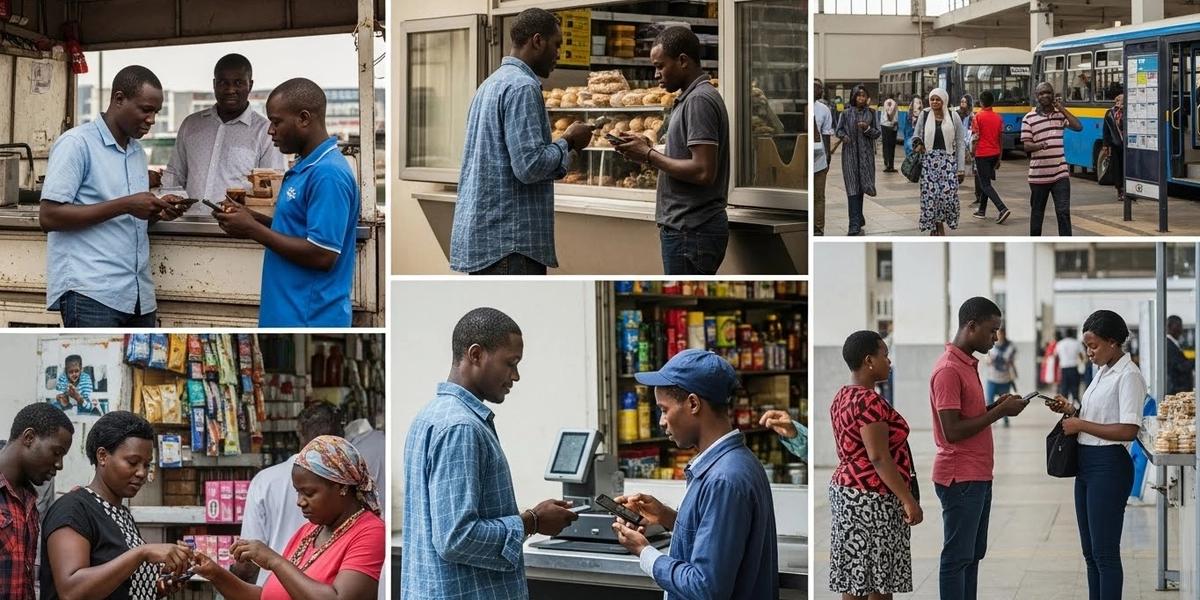
Africa dominates the mobile payment sector because local necessity drove innovation long before the term fintech became popular. In regions where traditional bank branches were scarce, mobile phones became the primary tool for saving and transacting. What started as basic airtime transfers has evolved into a sophisticated network of digital wallets and interoperable platforms.
Global payment companies now look to African startups and telco services to understand scaling and daily relevance. These systems allow users to manage everything from school fees to remittances directly from their devices. This leadership is defined by practical utility and a deep integration into the regional economy.
The Origins of Mobile Money Adoption
Mobile payments in Africa began with a simple promise: move money without banks. Telecom operators, with deep reach into rural and peri-urban areas, launched services that allowed users to send and receive funds directly on their phones. These early offerings solved the core problem of access, which traditional banks failed to address.
M-Pesa in Kenya is the most cited example, but it was neither the first nor the only one. Its success, however, showed how quickly users could adopt and trust mobile money when the service reliably worked. Adoption spread fast because phones were already in people’s hands, and the leap from airtime transfers to value transfers felt natural.
Scale and Volume of Transactions
Africa’s mobile payments ecosystem now handles staggering transaction volumes. According to the GSMA’s 2024 mobile money report, sub-Saharan Africa accounted for more than 70% of global mobile money transactions by volume. This share is remarkable given the region’s share of the global population and highlights how intrinsic mobile money has become to everyday commerce.
Users make micro payments, receive salaries, and manage merchant transactions without needing bank branches. The simplicity and ubiquity of mobile wallets have allowed people across income levels to transact seamlessly, often in areas where cash logistics are costly and insecure. This broad reach is not just a matter of convenience; it drives financial participation in economies that were once largely cash-dependent.
Infrastructure and Mobile Penetration
The rise of mobile money correlates with Africa’s rapid adoption of mobile phones. Today, mobile subscriptions outnumber bank accounts by a wide margin. The World Bank’s Global Findex database shows that, as of 2021, only around 43% of adults in sub-Saharan Africa had a bank account, while approximately 62% owned a mobile money account.
Mobile networks and smartphone penetration continue to expand, making digital payments more accessible. Even basic feature phones support SMS or USSD-based transactions, which means that payment technology is not limited to expensive devices. This inclusivity has been pivotal for reaching low-income, rural, and first-time digital money users.
Trust and Behavioural Adoption
Trust is currency in mobile payments. African users adopted mobile money because the systems proved reliable, affordable, and immediate. Where banks were seen as distant and slow, mobile money provided instant feedback loops.
Behavioural adoption reinforced itself. Once a critical mass of people used mobile payments for remittances, bills, and purchases, others followed. Networks became more valuable as more users joined, creating virtuous cycles that strengthened loyalty and habit formation. This social adoption pattern is now studied by digital payment leaders globally.
Innovation Beyond Basic Payments
Mobile money in Africa did not stop at peer transfers. Today’s platforms integrate savings, credit, insurance, and merchant services. Startups and established providers alike now offer APIs that allow third parties to tap into payment rails, creating fintech ecosystems with diverse revenue streams.
Some companies use transaction data to assess creditworthiness, providing microloans to users without prior credit histories. Others bundle payment services with merchant analytics, loyalty programmes, and inventory tools. These innovations reflect a deep understanding of local commercial realities and keep users engaged beyond simple transfers.
Regulatory Frameworks and Financial Inclusion
Regulation has played a crucial role in shaping the success of mobile payments. While regulatory quality varies by country, several governments and central banks recognised early that clear, supportive rules could accelerate financial inclusion.
According to the World Bank, financial inclusion in sub-Saharan Africa improved significantly over the last decade, driven by digital financial services, including mobile money. Regulatory coordination with industry players helped ensure consumer protection, interoperability, and competition, thereby boosting user confidence.
Lessons for Global Payment Systems
Global payment companies now study African mobile money models for lessons on expanding digital finance. The combination of agent networks, low-cost transactions, and mobile-first design has relevance beyond Africa’s borders. Many emerging markets face similar challenges with banking access, yet few have implemented a system as successful and integrated as those on the continent.
Africa’s mobile payments success underscores that financial inclusion does not automatically arise from policy or infrastructure alone. It emerges when technology intersects with behaviour, trust, and real business needs. This trifecta, evident across many African innovations, guides both local founders and international observers as they contribute to the next phase of global payment evolution.
Africa leads the world in mobile payments through scale, innovation, and everyday use, offering key updates and trends shaping global digital finance today.
Check out our website for more of our FinTech-related content.