Understanding Africa's Data Protection Law

Niniola Lawal
Click to view profile
The African continent is experiencing an unprecedented surge in digital adoption, transforming its economic potential and drawing global attention. This rapid technological growth, however, comes with a profound responsibility to secure the personal data of its increasingly connected citizens.
As startups scale and cross-border digital trade expands, understanding and complying with Africa's emerging mosaic of data protection laws is no longer optional; it is a central pillar of business legitimacy. This framework is setting the rules for the continent's privacy first future.
The Continent's Legal Patchwork
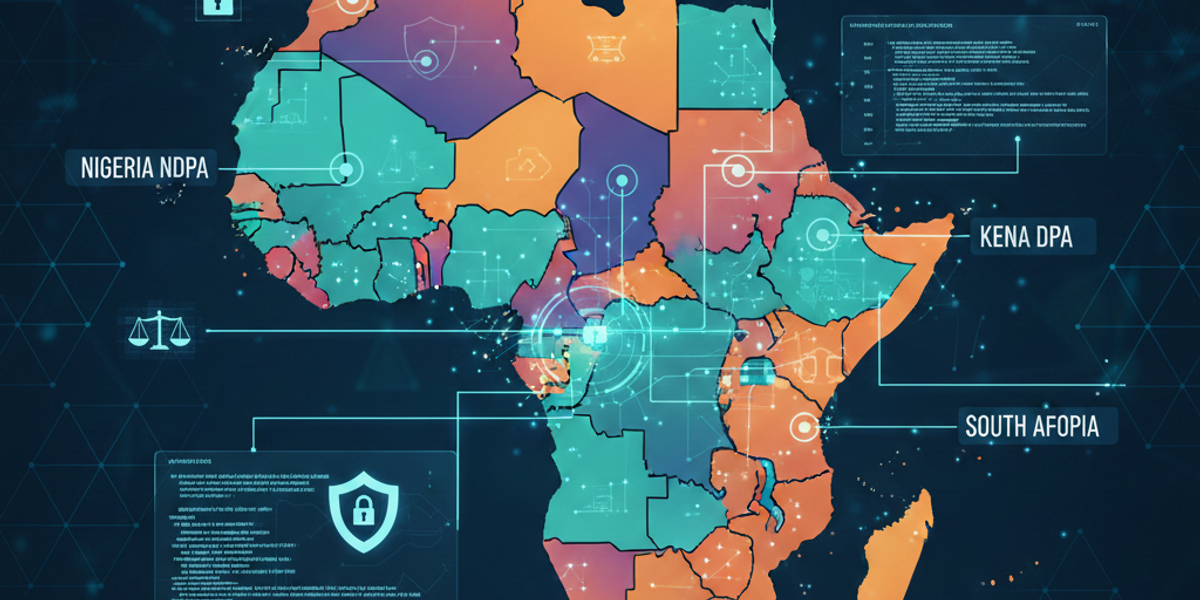
The approach to personal data protection across Africa is a complex mix of laws and rules, unlike the EU's unified GDPR. This lack of a regulatory monolith creates a huge compliance headache for pan-African tech businesses, demanding a country-by-country strategy.
However, the commitment to digital rights is clear: as of early 2024, 36 of 55 African countries (65%) have passed data protection laws; a remarkable acceleration. These foundational acts enshrine global principles, such as the right to consent, signaling a rapid shift toward regulatory maturity.
Major Legislation: Nigeria and Kenya Provide Updates
Nigeria and Kenya, Africa's most vibrant tech hubs, are now setting the standard for data privacy. Nigeria's Data Protection Act (NDPA) 2023 created the powerful NDPC, giving the regulator extraterritorial scope (applying globally) and imposing massive fines up to ₦10 million or 2% of annual gross revenue. Startups must now perform DPIAs for high-risk activities.
Similarly, Kenya's Data Protection Act (DPA) 2019, enforced by the ODPC, emphasizes consent and data minimization. The Kenyan regulator has already shown its teeth through multiple enforcement actions and fines against non-compliant firms, signaling a new, stricter era of adherence to digital rights in both nations.
South Africa's POPIA and the Trust Economy
South Africa's Protection of Personal Information Act (POPIA), in effect since 2021, set an early standard for data governance, making compliance a crucial brand differentiator. POPIA's emphasis on transparency has spurred a trend toward ethical marketing based on consent, teaching a vital lesson: data protection is not just about avoiding fines, but a proactive strategy to build loyalty and a trustworthy business model.
Compliance Challenges and Expert Insights
For Africa’s startup ecosystem, compliance is challenging due to limited resources and complex cross-border data transfers. Experts urge continental harmonization of data privacy laws, potentially through the Malabo Convention, to simplify regional expansion. Until then, compliance must be decentralized, with Data Protection Officers (DPOs) with regional knowledge serving as the bridge.
Future Trends and Actionable Steps for Businesses
The momentum in African data protection will only accelerate, with future regulations incorporating Artificial Intelligence (AI); 36 of the 40 most comprehensive laws already address automated decision-making. For tech businesses, the first step is a Data Mapping Audit: "you can't protect unknown data," followed by prioritizing clear consent, treating compliance as a continuous process for resilience.
An in-depth guide for global tech enthusiasts and businesses on the complex, yet critical, data protection laws in Africa, including the Nigeria Data Protection Act and Kenya's DPA, current compliance trends, and expert insights for navigating a privacy-first digital economy
Visit our website for more related content.