Africa's Digital ID Race: A Comparison of Kenya, Nigeria, South Africa

Niniola Lawal
Click to view profile
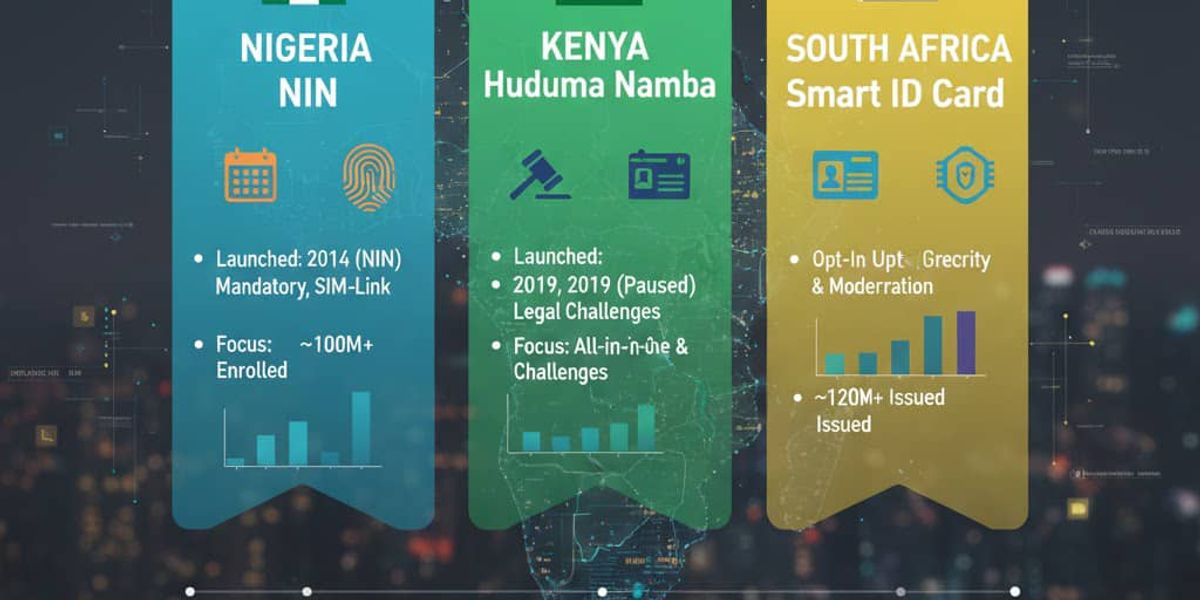
The quest for a national digital identity is reshaping how Africa’s major economies function. Kenya, Nigeria, and South Africa have taken three distinct paths, providing a crucial study in balancing economic opportunity, security, and citizen privacy rights. Understanding their digital identity systems is essential for tracking the future of African tech business and governance.
Kenya’s Digital Identity Relaunch
Kenya, a powerhouse of fintech innovation, saw its ambitious Huduma Namba project stalled by legal challenges over privacy and inadequate assessments. This resistance showed a population increasingly aware of its digital rights.
The government is now pivoting to a new, legally compliant digital ID focused on streamlining access to government services via eCitizen and boosting digital inclusion. This careful reboot underscores the need for robust legal safeguards to foster public trust in digital identification.
Nigeria’s Mandatory NIN Ascent
Nigeria’s National Identification Number (NIN) programme has been aggressively driven by mandatory linkage to mobile SIM cards, bank accounts, and critical services. This policy aims to strengthen Know Your Customer (KYC) processes and combat fraud. This strategy has resulted in rapid enrolment, with roughly 127 million unique NINs issued, significantly increasing coverage over five years.
However, this speed highlights the challenges of inclusion in rural areas with limited access to registration centres and to broadband. The NIN is now the defined bedrock of Nigeria’s Digital Public Infrastructure (DPI).
South Africa’s Biometric Foundation
South Africa builds its digital identity on a long-established, mature civil registration system. Its Home Affairs National Identification System (HANIS) uses biometric technology (fingerprints) for robust authentication in public services and the issuance of smart ID cards. While not a mobile-first solution, this foundation provides a stable system for verifiable identity.
Crucially, the country’s Protection of Personal Information Act (POPIA) is rigorously enforced, with the Information Regulator issuing substantial fines for breaches, signalling a clear commitment to rights-based governance.
The Privacy and Governance Test
A key difference is the enforcement of data privacy. Kenya (2019 DPA), Nigeria (2023 NDPA), and South Africa (2020 POPIA) all have modern, comprehensive laws, each overseen by a new Data Protection Commission. However, enforcement varies.
The real test is protection against fraud: Nigeria's financial institutions alone reported ₦42.6 billion in fraud losses in Q2 2024, surpassing 2023 totals (FITC, cited by Tech economy). This ongoing threat shows the urgent need for these identity systems to become secure, privacy-preserving authentication tools.
Expert View on Interoperability
For tech businesses, the best system is the one that allows the best interoperability. Nigeria’s single digital identity layer linked across various services is powerful for reducing onboarding friction for fintech.
The future involves shifting towards verifiable credentials that give users control over their data, aligning with current trends in decentralised identity. These three nations are shaping the conversation on how to balance state necessity with citizen rights.
Compare the digital ID systems of Kenya (New ID), Nigeria (NIN), and South Africa (HANIS). Explore their distinct approaches to financial inclusion, data privacy legislation, and technological implementation, and gain expert insights into current trends in African digital identity.
Visit our website for more tech-related content.